Spyne Console
Led the rebuild of the B2B console behind Spyne’s Virtual Studio, and built the access, billing and onboarding systems around it.

- Company
- Spyne.ai
- Role
- Full Stack Software Engineer
- Years
- 2022 to 2024
- Stack
- React, Redux, Node.js, Stripe, MongoDB
Context
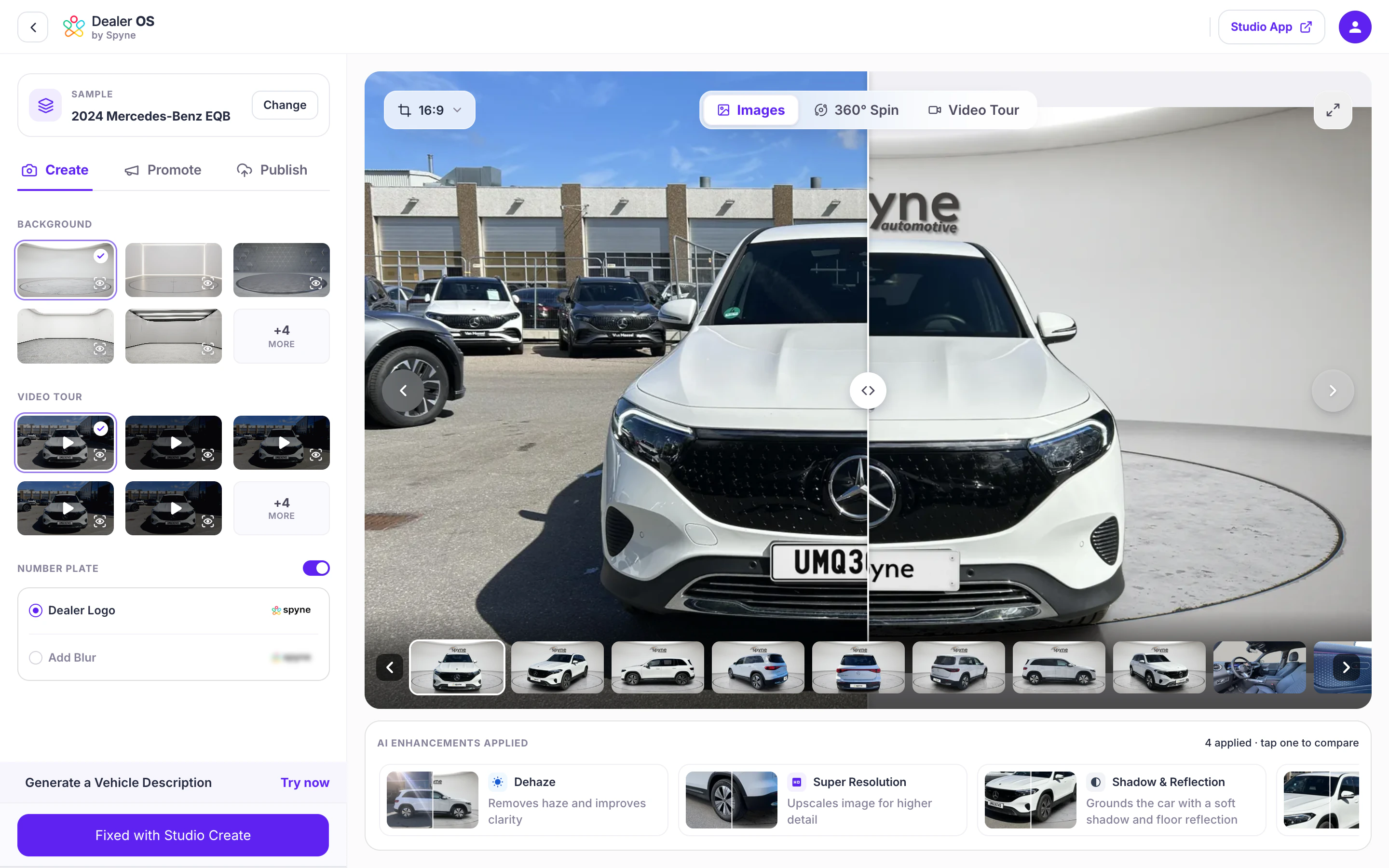
Spyne’s Virtual Studio turns photos taken on a dealership lot into studio-quality listings. The Console is where dealers, from single rooftops to enterprise groups, upload, process and publish them. It needed a modern foundation: consistent UI, role-based access, self-serve purchasing and faster enterprise onboarding.
What I owned
- Console rebuild in React and Redux
- Role-based access and centralized login
- User invitations and guest access
- Enterprise onboarding tool
- Self-serve signup with credits and Stripe
- Credits microservice, with the platform team
Request path
Schematic · Spyne Console
Console
React, Redux, atomic UI
Login and roles
Central auth, RBAC
Credits service
Node microservice
Billing
Stripe, self-serve
Request path
Engineering notes
A component system from scratch
Every screen is assembled from shared atomic components, so new features stay consistent as the console grows.
Access for teams
Role-based access across the console and a centralized login, with invitations and guest access for collaborators.
Enterprise setup, without engineering
An internal onboarding tool lets sales and customer success configure each new client themselves.
Self-serve revenue
A product-led signup flow with guided coach marks, credits and Stripe checkout.
Outcome
Dealers can sign up, buy credits and manage their teams on their own, and enterprise clients are configured without engineering time.